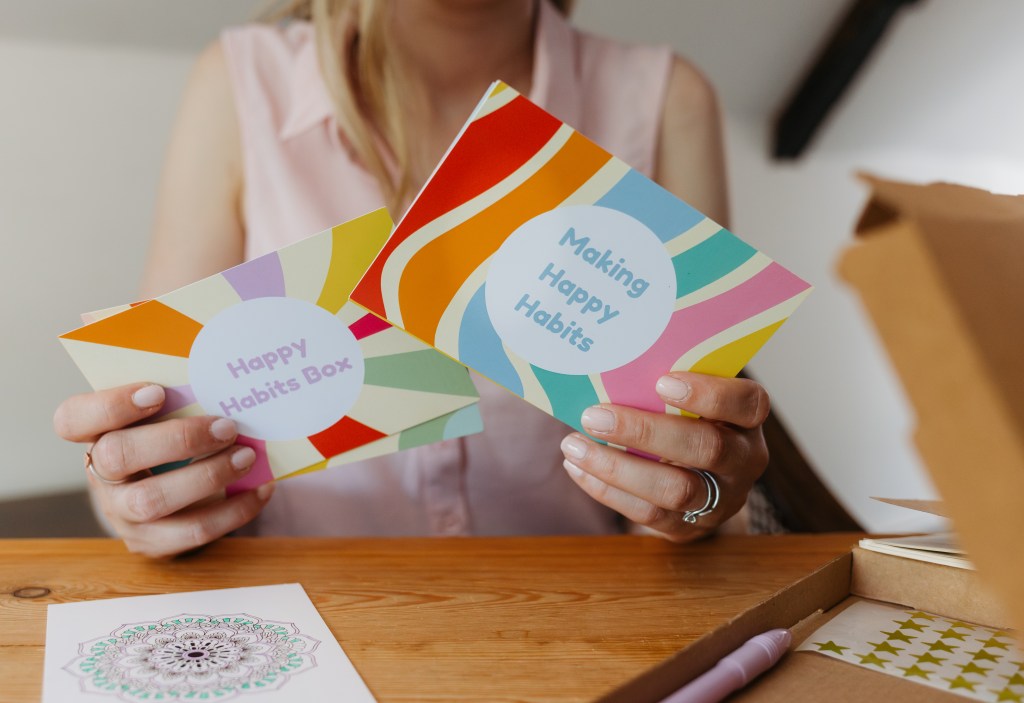
Making Happy Habits

  • Be clear
  • Be positive
  • Be specific
  • Be Practical
  • Reward yourself

How to achieve this?

Are you Ego scrolling

As featured in Stylist, July 2025

Dating apps can be fun and even a way to improve our wellbeing, but only if we stay in control of how we use them.

Dating apps can be validating

One of our core psychological needs as humans is a sense of belonging and acceptance. Dating apps can offer this through validation of a person’s attractiveness and social worth, as well as finding connection.

When used in a balanced way, this social validation can enhance wellbeing, boost self-esteem, and foster a sense of fulfilment, while also reducing feelings of loneliness.

Dating apps can lead to bad habits

Positive experiences of validation or wellbeing boosts can reinforce scrolling on dating apps, turning it into a habit. If left unchecked, this can lead to excessive use, which may have the opposite effect on wellbeing. Research has shown that compulsive Tinder use is linked to low mood, poor self-esteem, and reduced life satisfaction.

If you notice that scrolling leaves you feeling worse rather than better, it might be time to pause or set limits on how often you use these apps.

How to reset your ego scrolling

The best way to address this is by asking yourself why you’re scrolling, and how you feel in the moment. It’s a process that takes practice and conscious effort, but it pays off when you learn to recognise and change unhelpful habits.

If you notice yourself scrolling on dating apps without a clear purpose, try deliberately switching to something else. Research suggests that positive emotions help us recover more quickly from negative experiences, so choosing something fulfilling can be very effective.

Setting clear boundaries around when and how long you scroll can also help prevent negative patterns. For example, you could pick a specific time of day to open a dating app, allowing yourself a finite window before moving on to something else. Setting an app time limit using your phone’s settings can be an effective way to manage this.

You might also choose to do something enjoyable straight after using the app, giving you more motivation to stick to your boundaries. Alternatively, you could positively reinforce your limits by rewarding yourself when you keep to your set time.

If you need tips for building happy habits, I’ve provided some here!

Getting over your to do list burnout

Making Intentional Time for Yourself

Set Boundaries Around Chores

Spend Meaningful Time with Others

The Power of ‘Slow and No’

Practicing Self-awareness

Coping Creatively: Resilience Building Workshops

Getting started: simple craft supplies for wellbeing

(Paid links)

As an Amazon Associate I earn from qualifying purchases.

How to take time away from tech

As Featured in Woman & Home, 11th June 2025

Photo by Tyler Lastovich on Pexels.com

Focus on the Positive

Be Specific and Measurable

Photo by Esra Afu015far on Pexels.com

Picture Your Progress

Make It Practical and Doable

Navigating the ‘quarter-life-crisis’

As featured in The Mirror 01.02.2025

Increasing numbers of young adults are experiencing what they call a ‘quarter-life-crisis’.

Forget the mid-life-crisis stereotypes of a middle aged man buying a sports-car in his 50s. Now people in their 20s are struggling with life transitions and understanding world, and who they are within it.

Culturally the concept and transition to adulthood has changed and become longer than for past generations. Emerging adulthood is now not a transition stage but a full developmental phase that lasts from18 years to about age 29 years of age. Whereas in say the 1970s, people were in full time work, married and having their first child by 25, these traditionally ‘Big’ life events are happening up to 10 years later than in the 1970s.

In the present day, people in their 20s are still learning about their identity – who are they, what is their place in the world, what do they want to do with their life.

It is also a stage of great instability in terms of their environment, as people figure out who they are they are also navigating an ever changing employment and economic landscapes.

It is no surprise then that more half of emerging adults often experience anxiety, and a third report often feeling depressed. Even if this is not a clinical diagnosis, more complex living environments twinned with expectations that do not align with changing society can lead to more stress and negative impacts on mental wellbeing.

Emerging adulthood can bring opportunities

Though this period of life seems defined by uncertainty, it can also present a lot of opportunities. Having more time as an emerging adult allows for exploration, learning, and self-understanding, that can ultimately lead to more intentional life choices. Rather than viewing this stage as a crisis to be fixed, it may be more helpful to recognise it as a normal part of modern development.

A good way to navigate this new season of life is to ensure you have good social support, realistic expectations, and have open conversations with people around you. Ask for advice, help and support. Take time to make decisions and reflect on their outcomes.

By acknowledging the challenges of emerging adulthood and reframing them as part of a longer journey toward self-understanding, society can help reduce negative views of emerging adulthood and empower young people to find meaning and resilience in the face of change.

Creating digital boundaries for your mental health

As featured in Women’s Health; 13th May 2025

While technology has improved access to information and made life easier in many ways, it requires finding a balance. Smartphones have created both benefits and challenges in daily life.

Identifying problematic use is about understanding how and why you’re using your phone. Are you picking it up out of necessity or habit? If you’ve set aside time to reply to messages, do you put your phone down afterwards or do you start scrolling mindlessly?

Try the Happy Habits box to learn news ways to build resilience and wellbeing.

A Recipe for Moving and Coping

What Is Burnout?

As featured in The Mirror US 15/04/2025

Photo by Photo By: Kaboompics.com on Pexels.com
Photo by Mateusz Dach on Pexels.com

What is stress? And can it be good for you?

As Featured in Your Healthy Living 07/04/2025

Stress arises when a situation demands more than we feel our current circumstances allow. It is often linked to unpredictability, lack of control, significant life changes, or internal conflict.

At work, for example, an unexpected deadline may feel stressful—not because you lack the ability to complete the task, but because it requires more time than you believe you have available.

The key difference between stress being a positive or negative experience is motivation. Eustress is stress that acts as a motivator. For instance, adjusting your schedule to meet a tight deadline may feel like an exciting challenge. In contrast, distress occurs when stress feels overwhelming or discouraging, such as when multiple deadlines collide, making it difficult to cope.

Regardless of whether stress is perceived as positive or negative, it triggers the same physical response. The body releases adrenaline and cortisol into the bloodstream, increasing heart rate, speeding up breathing, and tensing muscles—known as the “fight or flight” response.

This response is adaptive and beneficial in the right circumstances, but the body needs time to recover afterwards. Heart rate and breathing should return to normal, and muscles should relax. However, when stress is prolonged, the body does not get enough time to recover between stress responses. Over time, this can negatively impact blood pressure, sleep, concentration, and the immune system, among other aspects of health.

The key to managing stress is setting boundaries and building healthy habits that support resilience—the ability to adapt and cope with life’s challenges.

Learn more with my Happy Habits Box!

Resilience can be developed through daily habits that promote happiness and wellbeing. When life is going well, there is time and energy to establish these habits, making them invaluable when faced with difficulties. For example, maintaining a good bedtime routine—ensuring enough sleep in a restful environment—helps support recovery when stress arises.

Photo by Daniel Reche on Pexels.com

Engaging in activities you enjoy, such as running, going to the gym, or more relaxing hobbies like knitting, also plays a role. Setting clear boundaries between work and personal life is another crucial strategy, providing a buffer when one area becomes stressful.

Social support is equally important for resilience and overall wellbeing. Feeling safe and supported—both practically and emotionally—enhances our ability to manage stress. Nurturing meaningful friendships or connecting with people through shared interests helps build a supportive network, improving our ability to navigate stressful situations.