A Recipe for Moving and Coping

What Is Burnout?

As featured in The Mirror US 15/04/2025

Photo by Photo By: Kaboompics.com on Pexels.com
Photo by Mateusz Dach on Pexels.com

What is stress? And can it be good for you?

As Featured in Your Healthy Living 07/04/2025

Stress arises when a situation demands more than we feel our current circumstances allow. It is often linked to unpredictability, lack of control, significant life changes, or internal conflict.

At work, for example, an unexpected deadline may feel stressful—not because you lack the ability to complete the task, but because it requires more time than you believe you have available.

The key difference between stress being a positive or negative experience is motivation. Eustress is stress that acts as a motivator. For instance, adjusting your schedule to meet a tight deadline may feel like an exciting challenge. In contrast, distress occurs when stress feels overwhelming or discouraging, such as when multiple deadlines collide, making it difficult to cope.

Regardless of whether stress is perceived as positive or negative, it triggers the same physical response. The body releases adrenaline and cortisol into the bloodstream, increasing heart rate, speeding up breathing, and tensing muscles—known as the “fight or flight” response.

This response is adaptive and beneficial in the right circumstances, but the body needs time to recover afterwards. Heart rate and breathing should return to normal, and muscles should relax. However, when stress is prolonged, the body does not get enough time to recover between stress responses. Over time, this can negatively impact blood pressure, sleep, concentration, and the immune system, among other aspects of health.

The key to managing stress is setting boundaries and building healthy habits that support resilience—the ability to adapt and cope with life’s challenges.

Learn more with my Happy Habits Box!

Resilience can be developed through daily habits that promote happiness and wellbeing. When life is going well, there is time and energy to establish these habits, making them invaluable when faced with difficulties. For example, maintaining a good bedtime routine—ensuring enough sleep in a restful environment—helps support recovery when stress arises.

Photo by Daniel Reche on Pexels.com

Engaging in activities you enjoy, such as running, going to the gym, or more relaxing hobbies like knitting, also plays a role. Setting clear boundaries between work and personal life is another crucial strategy, providing a buffer when one area becomes stressful.

Social support is equally important for resilience and overall wellbeing. Feeling safe and supported—both practically and emotionally—enhances our ability to manage stress. Nurturing meaningful friendships or connecting with people through shared interests helps build a supportive network, improving our ability to navigate stressful situations.

Ways to embrace and accept sadness in a healthy way

As featured in Stylist March 2025

Sadness is a natural, important emotion that helps us process life’s experiences, learn about ourselves, and grow. 

First, we need to understand why we experience sadness. Sadness typically arises when we experience a type of loss, either something tangible like a possession, or experiences like connection with others.

Photo by cottonbro studio on Pexels.com

Whilst sadness is unpleasant, this negative experience lets us know that something was important to us, and so we learn about our needs, values and goals in the same way we do with positive experiences. Together, positive and negative experiences allow us to feel fulfilled in live, as we have things and experiences that we do not want to lose. 

When addressing sadness, getting a balance is key; dwelling on sadness can lead to a negative outlook on life, and supressing negative emotions altogether can negatively impact mood. But the concept of ‘embracing sadness’ can feel quite strange; no one truly relishes a negative experience but remembering that emotions are not permanent can support ‘feeling our feelings’ in the moment, and acknowledging that they will pass.

There are a number of exercises you can try out to help with this process.

Start with acceptance – A gentle way to accepting sadness is by first observing emotions in everyday life, at times when you are not feeling sad. Keeping a diary or journal can help with this. Try noting your emotions at different times of day, how long they last, thoughts that accompany them, and physical sensations. With practice this type of self-reflection becomes easier. As you gain confidence, you can start applying this to moments of sadness.

Observe your sadness– By taking an observer’s perspective you can notice emotions without judgement. Ask yourself ‘How does this sadness feel in the moment?’ ‘What physical sensations am I experiencing, and where is this in my body?’ You can also notice as you go through these questions how sadness changes, and what the impact of this change is. Bringing more objective awareness to your sadness can highlight that emotions are not permanent, and that you are not your emotions.

Describe your sadness – Going beyond a label of ‘sadness’ can help reduce the intensity of emotions. Describing can also help you reflect on the meaning behind this experience. You could take a commentator stance, explaining what the feeling is, as if to another person. Describing sadness can provide insight into what’s really going on, and reduce any related overwhelm. For example, if you have broken a treasured item possession, you might say:

  • I feel sadness in my shoulders
  • I feel disappointment in my stomach
  • The possession reminds me of a person I miss
  • Without this physical reminder I feel this loss more

Learn from your sadness – Reframing sadness as a learning experience can help shift perspective from the immediate emotion, without supressing or ignoring it. The ‘What, So What, Now What?’ method can be used to reflect on your emotional experience. 

  • What? – What did I experience? 
  • So What? – What does this sadness tell me about my strengths, values, and goals.
  • Now What? – How can I respond to similar experiences in the future?

By embracing, reflecting, and learning from sadness rather than avoiding it, we allow ourselves to heal and move forward with greater emotional strength.

Why you should pick up a cosy hobby

Featured in Good Housekeeping here and here

Research has shown that there are several pathways to happiness and good mental wellbeing. One of the most effective is simply doing activities that bring us joy and a sense of fulfilment. But this becomes more effective when we combine our favourite hobbies with other key ingredients for happiness. 

Take knitting, for example. Engaging in activities we truly enjoy helps build resilience—the ability to adapt to challenges and manage stress. When we are fully absorbed in a creative task, we can enter a state of “flow,” where we focus entirely on the present moment rather than dwelling on the past or worrying about the future. This level of engagement leads to greater life satisfaction and productivity. 

Social connection is another key ingredient. Feeling supported and a sense of belonging helps us manage stress more effectively. Hobbies like knitting and crochet provide wonderful opportunities to build friendships based on shared interests, and doing so strengthens our social network. Even better, helping others is another way to achieve happiness, so supporting your network adds to the personal benefits as well!

Having a sense of meaning and accomplishment are other great ways to boost wellbeing. Setting personal goals to work towards in any area of life, including cosy hobbies, provides purpose to our pleasures. Whether you’re learning a new craft or challenging yourself with a new pattern, working towards goals and feeling accomplished boosts self-esteem, positive emotions, and overall wellbeing.

Photo: Emma Palmer-Cooper

The joy of cozy hobbies is that they naturally incorporate many of these ingredients. You can enjoy them alone, or as part of a community. Whether you connect with others in person or online, the benefits remain the same: a greater sense of joy, engagement, purpose, accomplishment, and shared connection support your wellbeing.

So, if you’re looking for a scientifically-backed way to increase your happiness, picking up a cozy hobby might be the perfect place to start!


3 Good Things a day can improve wellbeing

How to improve your mood

3 Good Things in under a minute – YouTube @dr_emmaclaire

You can try this and other Positive Psychology activities with the Happy Habits Box.

Mindful Colour Walks

What is a colour walk? 

How does a colour walk work? 

What are the benefits of trying a colour walk? 

How can we be more mindful on a walk to reap more benefits? 

How often should be doing mindful walking

Photo by Vlad Cheu021ban on Pexels.com

Reference:

How a mindful hobby could help you break your after-work ‘doomscrolling’ habit

Knitting is one hobby that can help you focus your attention and be present in the moment. Yavdat/ Shutterstock

1. They hold positive attention

2. They’re calming

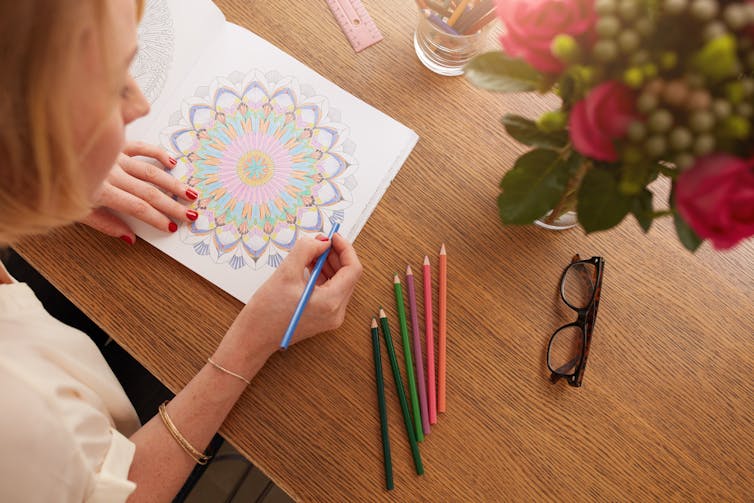
A woman colours on a page with coloured pencils.
Hobbies can help you relax and unwind. Jacob Lund/ Shutterstock

3. They provide a sense of achievement

4. They reduce stress and anxiety

5. They offer a sense of belonging

Choosing the right hobby

Exams: seven tips for coping with revision stress

pio3/Shutterstock

Emma Palmer-Cooper, University of Southampton

Exam season is underway across the UK. If you’re sitting exams this summer, you might be feeling stressed and a bit overwhelmed as you try to prepare.

You’re not alone: stress is a normal part of the human experience, and this is a particularly challenging time. But there are ways you can manage this stress and maintain your wellbeing. Developing healthy habits to cope with stress will improve your psychological and emotional wellbeing, and ultimately support your academic achievements.

Here are seven tips that you might find helpful.

1. Take a breath

The first thing to do when experiencing stress in the moment is to take a deep breath.

When you start to feel stressed, your heart rate increases, your palms get sweaty and your blood pressure rises. If you take a few deep breaths when this feeling sets in, you can regulate your heart rate and the physical experience of stress can be reduced. This can help focus your mind and create space to decide how to manage this stress.

Once you have taken a breath, there are other things you can do to help you feel less stressed.

2. Set goals – and be realistic

It is really important to remember that you can’t “complete” revision. Instead, you can set achievable goals that you feel comfortable with.

Don’t write so many things on your to-do list that you feel anxious just looking at it. Think about what is realistically achievable in the time you have, and set goals for revision tasks that lead to steady progress. Don’t forget to factor in time for self-care, and remember to congratulate yourself on your achievements.

3. Take a break

No one can maintain complete focus on a task like revision forever. Over time, concentrating makes us feel tired and actually reduces our ability to complete a activity well. It can also mean we need more energy to complete our task to our usual standard, and increase the chance of mistakes.

So, taking regular breaks really will improve your ability to work hard. If it’s all getting too much, do something else for a bit.

4. Get active – and go outside

Regular physical activity is really important for improving wellbeing and reducing stress. This can be whatever suits you: go for a walk or a run, or take part in a sport you like. Don’t avoid it because you feel you should be revising instead.

Two young women walking in park
You could arrange to go for a walk in the park with a friend. Antonio Guillem/Shutterstock

If you can get outside to a local park to exercise, even better. My research with colleagues has shown that during the pandemic, even without the usual levels of social interaction and social support, the simple act of spending time in green spaces like parks had a positive impact on student wellbeing.

5. Find your people

Social connection is a really important source of wellbeing for young people. You might be chatting to friends online throughout the day, but lots of social media use may also have a negative impact on wellbeing. It’s important to maintain connections offline, too: organise hangouts with friends during revision periods, and enjoy time in other people’s company during your rest time.

Your regular breaks from revision are the perfect opportunity to bring some of these ideas together. Perhaps meet up with a friend for a walk in the park.

6. Make healthy choices

It might be tempting to reach for an energy drink so you can keep on revising late into the evening. But drinking energy drinks can lead to poorer academic performance – as can drinking alcohol and vaping.

Instead of an energy drink, just go for water or a nutritional alternative like a fruit smoothie. And instead of staying up late to revise, prioritise your sleep. Disrupted sleep can increase our experience of negative mood, in a similar way to experiencing jetlag – and getting a good amount of sleep is linked to doing better in exams.

7. One size doesn’t fit all

The tips here are backed up by evidence and are a good place to start when it comes to managing exam stress. But you should also think about what you know works well for you. Think about what makes you happy and helps to calm you down if you feel overwhelmed: maybe writing in a journal, or listening to a favourite album. Combining healthy habits and favourite activities is a recipe for success, both in terms of exam performance and stress management.

Emma Palmer-Cooper, Lecturer in Psychology, Centre for Innovation in Mental Health, University of Southampton

This article is republished from The Conversation under a Creative Commons license. Read the original article.

Colouring in: a big-impact, low-budget support for student well-being

Written for the Times Higher Education Campus Magazine, 29 Nov 2024

Sit, slow down and colour. It’s such a simple activity, but for many students, colouring in is a powerful way to ease stress and improve mental well-being. In public areas, libraries or private spaces, students can take the time to fill blank spaces with coloured pens or pencils, and let the repetitive motion and creativity calm their minds….