Good Gossip, Bad Gossip: The Science of Social Storytelling

As featured in PopSugar 9/09/2025

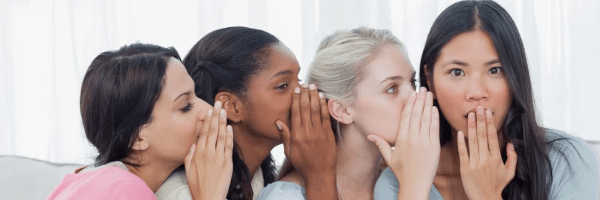
I was asked to comment on the role of gossip, and how this might be a positive tool and exchange of information after a wedding, so here’s what I found:

What is gossip really?

Gossip is often dismissed as trivial or overtly negative, but it has actually served a longstanding social purpose. Gossip is how we exchange information, reinforce social norms, and strengthen interpersonal bonds.

It does this by fostering connection between individuals and also wider social groups. Gossip acts as a form of social currency. The exchange of social information supports social cooperation in large groups (when done in a positive way) can build trust. As people share positive gossip they bond and strengthen ties within a group. 

Is wedding gossip good?

In the context of a wedding, positive gossip serves to strengthen group identity as attendees, and as important people in the lives of the newly married couple. Gossip also spreads social information, meaning people who weren’t able to attend, or missed particular parts of the wedding, are able to catch up through sharing stories. It might even help the newlyweds, who can’t be everywhere all at once, enjoy more aspects of their wedding. 

Why do we gossip?

Research has shown that people who are more central to a social groups with are more likely to share positive gossip, and also more likely to be the subject of positive gossiper. Negative gossip tends to be about people who are less central to a group, and can lead to them being shut out further. 

Overall, positive gossip builds connection whereas negative gossip can negatively impact a group and its individual members. 

When can gossip go bad?

While gossip can foster connection, it’s important to acknowledge that it can also cross boundaries, especially when the consequence is to undermine others. Research shows that negative gossip tends to focus on people with lower social status or fewer connections within a group, which can lead to exclusion. In these cases, gossip becomes less about bonding and more about reinforcing hierarchies or putting someone in a negative light. 

How to stay positive with gossip

To keep gossip positive and constructive, it is context and intent that matter. Gossip that celebrates others, shares joyful updates, or reinforces shared values is good for a group. But when gossip veers into criticism or speculation, especially without a person’s presence or consent, it risks becoming a form of social undermining.

In private scenarios, expressing concerns or frustrations can be valid and even necessary. In these situations it’s best to speak with empathy, and focus on behaviours rather than a person’s character. You can also think about the purpose of such a conversations, is it looking for advice? And ideally it should be done with someone trusted who won’t let the conversation lead to any unintended harm.

Encouraging positive storytelling and sharing helps ensure gossip remains a force for connection, not exclusion.
What does creativity mean to me

Creativity is most traditionally associated with artistic expression, especially when it results in something that is striking in a tangible or obvious way. But from a scientific perspective, creativity is this and more, and it is this broader understanding that I find truly exciting.

To me, creativity represents a mental and emotional space where we are free to explore, to experiment, to fail, and to grow. Creativity is strongly linked to wellbeing, but this is not because artistic individuals are inherently happier. An ability to think creatively helps us to navigate difficult situations more adaptively. It supports emotional regulation, tolerance of ambiguity, and intrinsic motivation. It helps us remain open and flexible when facing uncertainty, and offers outlets for processing negative emotions, which in itself is a form of problem-solving. It reflects resilience, our capacity to try, to persevere, and to approach challenges in novel ways. While outwardly creativity may appear as a perceptible output or innovation, inwardly, it is more about how we think, how we process complexity, and how we respond to uncertainty.

Copyright Emma Palmer-Cooper

In our own research on creativity, we used questionnaires asking participants to rate themselves on traditional forms such as painting, music, and the culinary arts. However, what proved most interesting to me was a final open-ended question that invited people to describe any other ways in which they saw themselves as creative. Every response was different. Participants shared examples from fields as varied as carpentry, sports, farming, accountancy, and broadcasting. In other studies, asking students to engage with simple creative activities led to significant reductions in stress and how they perceived stressful situations. What has emerged is a strong sense that creativity is, at its core, our unique ability to approach and solve problems in a positive way. 

This is why I encourage students to reflect on their own personal expressions of creativity. Recognising and engaging with it can reveal a lot more about your strengths and abilities than you may see on the surface. 

In my own work, writing and creating content about my teaching and research has helped me think about what I do in different ways. I’ve since found that it’s become a very useful tool, finding new angles for my teaching, new research ideas, and new ways of doing work. This freedom to engage with my work in different and creative ways helps me overcome problems and enjoy the process.

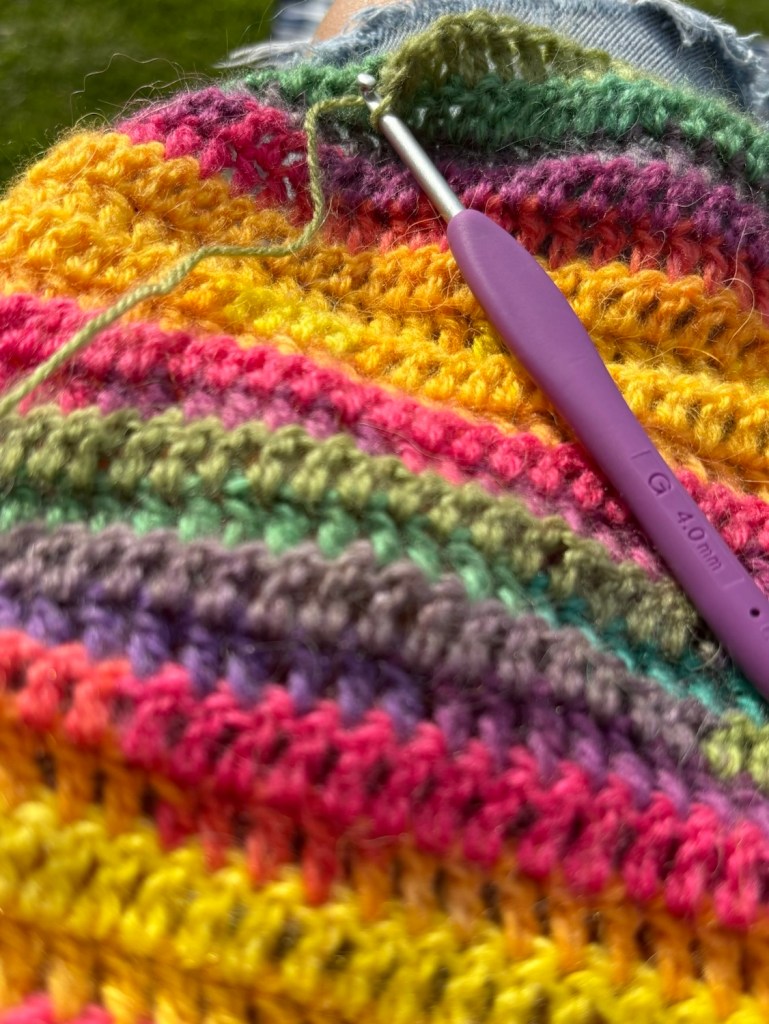
Copyright Emma Palmer-Cooper

My personal creative practice of yarn craft has also led to new and exciting opportunities. From developing research ideas, innovating my teaching methods, and delivering science communication events, creativity in one area of my life has influenced my ability to deliver ideas in the other.

As Psychologists, creativity is not limited to what we produce in research, education or practice. Creativity is a dynamic, internal process that shapes how we experience and respond to the world, and how we approach our diverse and vibrant field.

Braintenance – Review

Braintenance: How to Create Healthy Habits and Reach Your Goals – Dr Julia Ravey

Coping Creatively: Resilience Building Workshops

Getting started: simple craft supplies for wellbeing

(Paid links)

As an Amazon Associate I earn from qualifying purchases.

Why you should pick up a cosy hobby

Featured in Good Housekeeping here and here

Research has shown that there are several pathways to happiness and good mental wellbeing. One of the most effective is simply doing activities that bring us joy and a sense of fulfilment. But this becomes more effective when we combine our favourite hobbies with other key ingredients for happiness. 

Take knitting, for example. Engaging in activities we truly enjoy helps build resilience—the ability to adapt to challenges and manage stress. When we are fully absorbed in a creative task, we can enter a state of “flow,” where we focus entirely on the present moment rather than dwelling on the past or worrying about the future. This level of engagement leads to greater life satisfaction and productivity. 

Social connection is another key ingredient. Feeling supported and a sense of belonging helps us manage stress more effectively. Hobbies like knitting and crochet provide wonderful opportunities to build friendships based on shared interests, and doing so strengthens our social network. Even better, helping others is another way to achieve happiness, so supporting your network adds to the personal benefits as well!

Having a sense of meaning and accomplishment are other great ways to boost wellbeing. Setting personal goals to work towards in any area of life, including cosy hobbies, provides purpose to our pleasures. Whether you’re learning a new craft or challenging yourself with a new pattern, working towards goals and feeling accomplished boosts self-esteem, positive emotions, and overall wellbeing.

Photo: Emma Palmer-Cooper

The joy of cozy hobbies is that they naturally incorporate many of these ingredients. You can enjoy them alone, or as part of a community. Whether you connect with others in person or online, the benefits remain the same: a greater sense of joy, engagement, purpose, accomplishment, and shared connection support your wellbeing.

So, if you’re looking for a scientifically-backed way to increase your happiness, picking up a cozy hobby might be the perfect place to start!


Mindful Colour Walks

What is a colour walk? 

How does a colour walk work? 

What are the benefits of trying a colour walk? 

How can we be more mindful on a walk to reap more benefits? 

How often should be doing mindful walking

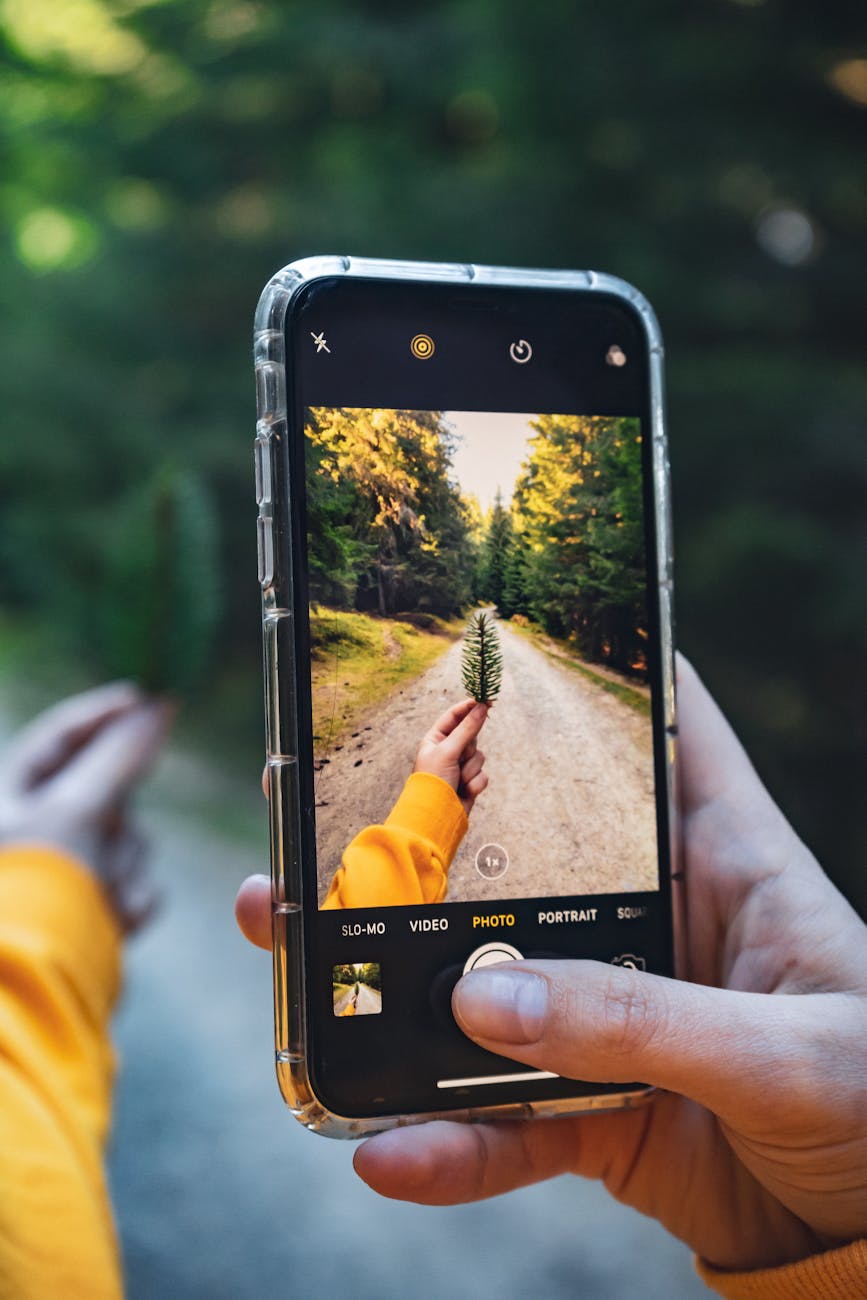
Photo by Vlad Cheu021ban on Pexels.com

Reference:

How a mindful hobby could help you break your after-work ‘doomscrolling’ habit

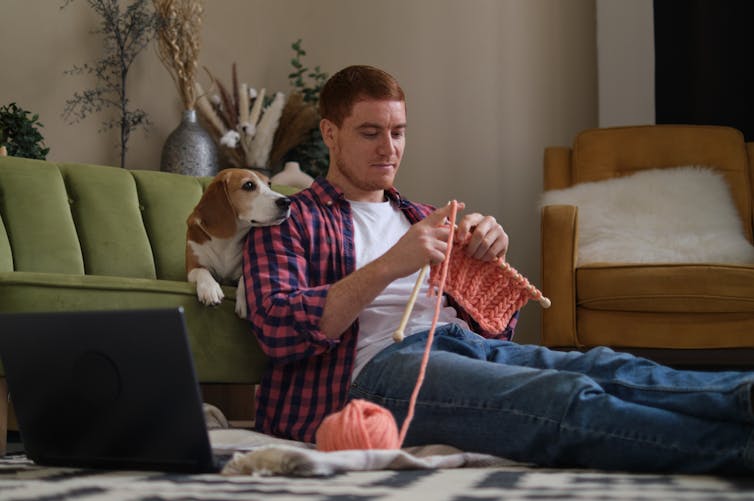
Knitting is one hobby that can help you focus your attention and be present in the moment. Yavdat/ Shutterstock

1. They hold positive attention

2. They’re calming

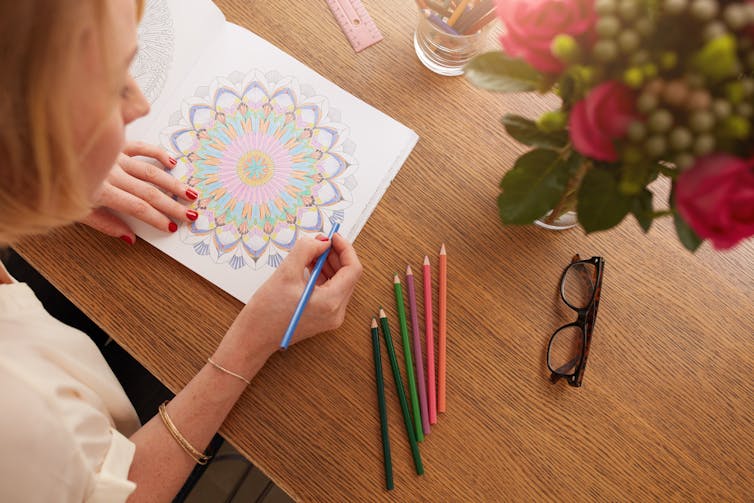
A woman colours on a page with coloured pencils.
Hobbies can help you relax and unwind. Jacob Lund/ Shutterstock

3. They provide a sense of achievement

4. They reduce stress and anxiety

5. They offer a sense of belonging

Choosing the right hobby

Guess Who: Women of the World Festival 2014

In March 2014, I took part in the Women of the World Festival at Southbank in London. I was delighted to be involved in such an exciting and important event!

The theme of the day was ‘Guess Who’, where 7 professionals (2 men and 5 women) stood on stage and gave only their name. The announcer, a presenter from Cbeebies no less(!), then read out the 7 professions and a piece of information about each professional, such as favourite colour or hobby, and from this one hundred 10 year olds had to guess which person matched each profession.

IMG_3417

The professions were; Plumber, Artist, Dancer, Scientist, Champion Athlete, Railway Engineer and Lighting Technician.

The idea of the event was to break down gender stereotypes surrounding profession and show children than men and women can do ANY job they want, hurrah! At the beginning of the day the stereotyped beliefs shone through. Both men were most likely to be voted Plumber and Athlete, because they were men. I was voted Dancer and Artist by over half of the groups, with only 10 out of 100 guessing I was a scientist.

After the children voted they then had two interactive sessions, a panel or a workshop, where professionals demonstrate their trade in a fun and engaging way.

I was asked to do a workshop. I designed an interactive experiment that the kids took part in, spelling out how science as a whole works and how psychology fits into this. As science is about asking questions and designing experiments to test them I had a bit of fun, explaining that psychology is the science of people and behaviour.

Screen Shot 2014-03-06 at 15.25.44

Research question:

Will you get round an obstacle course faster, when blindfolded, if a friend or someone else is giving you instructions?

IMG_3410

I asked the kids which group they thought would be faster and got some great responses!

Hypotheses:

H1‘Friends might try to trick you so that group will be slower’

H2 ‘You might not listen as hard to someone who’s not your friend because you don’t like them’

H‘Friends are always silly so it will take longer’

H4 ‘Friends trust each other more, so that group will be quicker’.

One group had boys and girls so we also looked into gender differences

HBoys are lazy so girls will be quicker’.

The kids were split into ‘best friends’ and ‘classmates’ pairs and each took it in turn to guide and be guided round a basic obstacle course (made with chairs and masking tape! Very professional I know) and were timed when doing it. After they all had a turn we plotted the average times of each group on a bar chart:

Screen Shot 2014-03-06 at 15.10.18
Screen Shot 2014-03-06 at 15.10.32
Screen Shot 2014-03-06 at 15.09.59

Though I’m not sure the results would stand up to peer review scrutiny, it was great to see the kids engaged and really get into trying to figure out why each group behaved differently.

The Big Reveal!

After the workshops we all gathered back on the main stage to find out which professional was which!

Dancer; Male (Lee)

Artist; Male (…)

Champion Athlete (weight lifter); Female (Monique)

Plumber; Female (Petra)

Technician; Female (Roz)

Railway Engineer; Female (Keely)

Scientist; Female (ME!)

After the Big Reveal
 After the Big Reveal (Belinda Lawley)

It was great to hear some of the reasons why the children assigned professions to each person:

Lee got Athlete because he wore trainers and running shorts, I got Artist because of the headband I was wearing and Monique got Dancer because of her slender figure. We then asked them do they think they were perhaps incorrect in judging people’s jobs on what they look like or what gender they are? The kids agreed.

The first group was all girls so I really drilled home how girls can do anything they want; one girl said I’d inspired her to be a scientist ‘but not in brains, because they’re gross’. I’ll take that win! The second group said I was the most fun session they’d done, which I’m also delighted with.

This event has made me realise even more how ingrained the stereotypes are for male and female jobs; we have to work harder to put an end to these so girls can pursue any career rather than one society deems normal.

I had a great time, I’d love to do more things like this, so if anyone knows of any opportunities please put in a good word! Also, I’ve got the name of a great Plumber who won’t make sexist remarks when I ask questions about my kitchen! Double Win.

On Stage for the BIG REVEAL
 On Stage for the BIG REVEAL (Belinda Lawley)