A colour walk is a mindful way to way to connect with your surroundings by focusing on specific colours while walking outdoors. This simple practice encourages awareness of the present moment, which can enhance wellbeing.
How does a colour walk work?
Many of us go through the day on autopilot, disconnected from where we currently are in the world. A colour walk shifts focus to the present moment, helping you feel grounded and engaged with nature. Choose one or two colours and actively seek them out as you walk. If you find your mind wandering, gently bring your attention back to your chosen colours.
What are the benefits of trying a colour walk?
Paying mindful attention to nature can cultivate positive emotions and a deeper sense of connection—to nature, others, and life itself. Noticing details and colours in the moment can also help set aside past, present and future worries.
If mindfulness is something you find challenging, a colour walk offers a simple, structured way pay attention and stay present in your surroundings.
How can we be more mindful on a walk to reap more benefits?
As you walk, reflect on how your surroundings and the colours make you feel. Paying attention to the emotions you experience during these moments can increase the effects.
How often should be doing mindful walking
Research shows that regular mindful practice, such as colour walks, builds resilience by improving psychological wellbeing and reducing stress.
The key is engagement, choosing a colour you love, or walking in a space that brings you joy makes commitment easier. If you need more focus, try taking photos and reflecting on why this was a particularly pleasant or meaningful place or moment in time to really feel the impact. Regular practice can turn this into a regular, happy habit.
It’s a familiar picture for many of us: after a long day at work, we find ourselves glued to the couch, phone in hand. Maybe even for hours at a time. What starts as a way to mentally unwind or catch up on the news quickly becomes hours spent compulsively “doomscrolling” – the act of spending an excessive amount of time on social media scrolling through overwhelmingly negative content. A fear of missing out is what drives many of us to continue our repetitive scroll.
The good news is there are many ways to break this bad habit – and one way people have successfully replaced time on their phones is with a hobby.
By making a conscious decision to change a habit – such as picking up your phone and doomscrolling for hours – you can replace it with one that’s more fulfilling.
Having an after-work hobby is linked to better wellbeing and may play a part in reducing work-related stress.
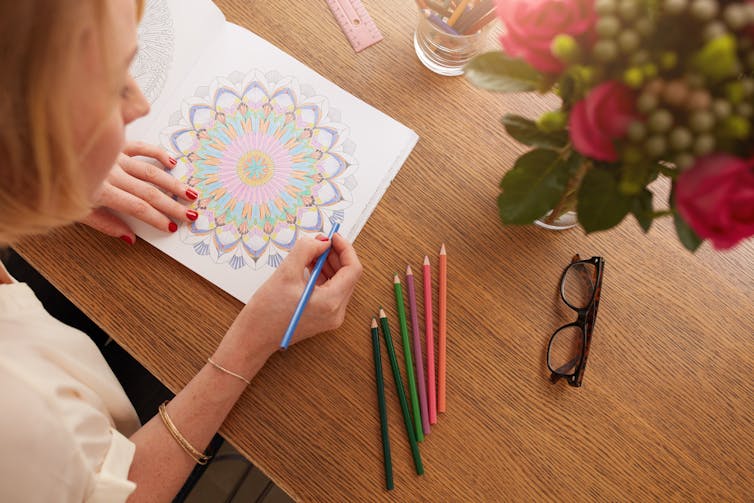
Some of the most beneficial hobbies to try in order to break your doomscrolling habit are those that encourage mindfulness. Doing a hobby mindfully simply means paying attention to what you’re doing and being in the moment – whether that’s colouring, knitting or sewing.
Mindfulness is the practice of focusing your attention on the present moment and experiencing your thoughts and feelings without judgment. It’s not necessarily about clearing your mind, but about engaging in an activity with your full attention, and not being distracted by other thoughts.
Here are just a few ways that mindful hobbies can help you break your doomscrolling habit.
1. They hold positive attention
When you’re focused on a craft, your hands are busy, so you’ll be too engaged to reach for your phone. Creative hobbies that require attention, such as knitting or colouring, can also act as a “flow activity”, where you lose track of time and feel fully immersed in what you’re doing. This can be a great antidote to losing hours doomscrolling.
2. They’re calming
Many people who have a creative hobby say the physical repetitive actions are meditative and calming.
Crafts can also support healthy emotion regulation – our ability to manage and respond to emotional experiences. Soothing your nervous system can counteract tension triggered by doomscrolling.
3. They provide a sense of achievement
Doomscrolling can leave people feeling a loss of control, whereas mindful hobbies provide a sense of control along with tangible results: a colourful drawing, a knitted scarf or perhaps an embroidered trinket.
Achievement is considered one of the core ingredients of psychological wellbeing – and is a key remedy to distress.
4. They reduce stress and anxiety
Mindful crafting offers a break from ruminating. Just ten minutes of regular mindful colouring – at least three times a week for two weeks – can reduce stress, anxiety and feelings of low mood, alongside improving quality of life.
Creative hobbies can also significantly lower levels of our stress hormone, cortisol, which promotes a sense relaxation.
5. They offer a sense of belonging
By engaging in a new hobby you also join a community of people with similar interests. This opens you up to more positive social interactions, and a sense of belonging is linked to better wellbeing.
Choosing the right hobby
Activities such as colouring, knitting, sewing and crochet are a good place to start as they involve repetitive, soothing movements along with a sense of achievement. Of course, you should choose a hobby you think you’ll enjoy, as you won’t build new habits doing activities you don’t want to do.
Here are some other things you can do when getting started to give you the best chance of success.
Start small. Actively setting a small and achievable change in behaviour can increase your success in building new, positive habits. So to begin with, choose a simple project that’s not too hard to complete – such as colouring a single page or knitting a small square. Or, set a goal to spend 10-20 minutes a day on your hobby after work before reaching for your phone. Early, achievable wins lead to a sense of achievement, and keep you motivated.
Set boundaries around phone use. Create a “no phone zone” and make time for your hobby. This will help remove temptation to scroll and make a more calm environment for you to craft in.
Be present. Notice the colours, textures and movements involved in what you’re doing. If your mind starts to wander, gently bring your focus back to your activity.
Join a community. Whether online or in person, connecting with others who do the same hobby can increase your sense of belonging and make it even more enjoyable. This can also promote more positive online interactions.
Breaking your doomscrolling habit doesn’t mean you have to abandon social media entirely. But swapping scrolling for mindful hobbies in your free time allows you to set meaningful boundaries and build positive habits. By prioritising your wellbeing and engaging with information in a balanced way, your brain gets a “mental break” from all the negative content.
Exam season is underway across the UK. If you’re sitting exams this summer, you might be feeling stressed and a bit overwhelmed as you try to prepare.
You’re not alone: stress is a normal part of the human experience, and this is a particularly challenging time. But there are ways you can manage this stress and maintain your wellbeing. Developing healthy habits to cope with stress will improve your psychological and emotional wellbeing, and ultimately support your academic achievements.
Here are seven tips that you might find helpful.
1. Take a breath
The first thing to do when experiencing stress in the moment is to take a deep breath.
When you start to feel stressed, your heart rate increases, your palms get sweaty and your blood pressure rises. If you take a few deep breaths when this feeling sets in, you can regulate your heart rate and the physical experience of stress can be reduced. This can help focus your mind and create space to decide how to manage this stress.
Once you have taken a breath, there are other things you can do to help you feel less stressed.
Don’t write so many things on your to-do list that you feel anxious just looking at it. Think about what is realistically achievable in the time you have, and set goals for revision tasks that lead to steady progress. Don’t forget to factor in time for self-care, and remember to congratulate yourself on your achievements.
3. Take a break
No one can maintain complete focus on a task like revision forever. Over time, concentrating makes us feel tired and actually reduces our ability to complete a activity well. It can also mean we need more energy to complete our task to our usual standard, and increase the chance of mistakes.
So, taking regular breaks really will improve your ability to work hard. If it’s all getting too much, do something else for a bit.
4. Get active – and go outside
Regular physical activity is really important for improving wellbeing and reducing stress. This can be whatever suits you: go for a walk or a run, or take part in a sport you like. Don’t avoid it because you feel you should be revising instead.
If you can get outside to a local park to exercise, even better. My research with colleagues has shown that during the pandemic, even without the usual levels of social interaction and social support, the simple act of spending time in green spaces like parks had a positive impact on student wellbeing.
5. Find your people
Social connection is a really important source of wellbeing for young people. You might be chatting to friends online throughout the day, but lots of social media use may also have a negative impact on wellbeing. It’s important to maintain connections offline, too: organise hangouts with friends during revision periods, and enjoy time in other people’s company during your rest time.
Your regular breaks from revision are the perfect opportunity to bring some of these ideas together. Perhaps meet up with a friend for a walk in the park.
6. Make healthy choices
It might be tempting to reach for an energy drink so you can keep on revising late into the evening. But drinking energy drinks can lead to poorer academic performance – as can drinking alcohol and vaping.
Instead of an energy drink, just go for water or a nutritional alternative like a fruit smoothie. And instead of staying up late to revise, prioritise your sleep. Disrupted sleep can increase our experience of negative mood, in a similar way to experiencing jetlag – and getting a good amount of sleep is linked to doing better in exams.
7. One size doesn’t fit all
The tips here are backed up by evidence and are a good place to start when it comes to managing exam stress. But you should also think about what you know works well for you. Think about what makes you happy and helps to calm you down if you feel overwhelmed: maybe writing in a journal, or listening to a favourite album. Combining healthy habits and favourite activities is a recipe for success, both in terms of exam performance and stress management.




 Emma Palmer-Cooper