If you’ve ever promised yourself you’d “just have a quick scroll” and found yourself still glued to your phone an hour later, you’re not alone. Social media is designed to keep us engaged,but with some thoughtful steps, you can create a healthier, more intentional relationship with it. Change isn’t about willpower alone; it’s about knowing why you want to change, using your strengths, and aligning new habits with your values.
1. Know Your Why Before making changes, pause and ask yourself: Why do I want a different relationship with social media? Is it because it’s eating into time with loved ones, affecting my mood, or replacing activities I value? The clearer you are, the easier it will be to build meaningful habits you can maintain.
Try pairing a long-term aim, such as “I want to spend less time scrolling”, with a practical short-term step, like limiting social media use to a 10-minute window in the morning and evening. Tools like app timers can help you stick to these boundaries and remind you when it’s time to move on to something more fulfilling.
2. Chase the Joy of Missing Out Goals are easier to stick to when they’re framed around what you’re moving towards rather than what you’re avoiding. If you’re cutting down on social media, think about what you’re gaining, like peace of mind, more time for hobbies, deeper face-to-face conversations. This is sometimes called the “Joy of Missing Out” (JOMO): the satisfaction of saying “no” to the scroll and “yes” to something more rewarding.
If that feels unfamiliar, think back to a time you put your phone aside. What did you do instead? How did you feel afterwards? Remembering those wins can reinforce your motivation when temptation strikes.
3. Make Your Goals Crystal Clear Vague intentions like “spend less time on Instagram” are harder to follow than concrete ones. Instead, try: “Check notifications once in the afternoon, then log off.” This way, you can track your progress and feel a genuine sense of achievement. Over time, you can extend your phone-free periods or reduce the number of apps you check.
4. Celebrate Your Success When you stick to your new habit, reward yourself. This doesn’t have to mean spending money,it could be making a favourite cup of tea, enjoying a walk, or spending time on a creative project you love. The key is to pause and notice the satisfaction that comes from following through. That positive reinforcement strengthens the habit and makes it more likely to last.
Remember: Forming a new habit takes patience and self-compassion. If you slip up, treat it as an opportunity to learn rather than a failure. With a clear purpose, realistic steps, and a focus on what you gain, social media can shift from a drain on your attention to a tool you use on your own terms.
Creativity is most traditionally associated with artistic expression, especially when it results in something that is striking in a tangible or obvious way. But from a scientific perspective, creativity is this and more, and it is this broader understanding that I find truly exciting.
To me, creativity represents a mental and emotional space where we are free to explore, to experiment, to fail, and to grow. Creativity is strongly linked to wellbeing, but this is not because artistic individuals are inherently happier. An ability to think creatively helps us to navigate difficult situations more adaptively. It supports emotional regulation, tolerance of ambiguity, and intrinsic motivation. It helps us remain open and flexible when facing uncertainty, and offers outlets for processing negative emotions, which in itself is a form of problem-solving. It reflects resilience, our capacity to try, to persevere, and to approach challenges in novel ways. While outwardly creativity may appear as a perceptible output or innovation, inwardly, it is more about how we think, how we process complexity, and how we respond to uncertainty.
Copyright Emma Palmer-Cooper
In our own research on creativity, we used questionnaires asking participants to rate themselves on traditional forms such as painting, music, and the culinary arts. However, what proved most interesting to me was a final open-ended question that invited people to describe any other ways in which they saw themselves as creative. Every response was different. Participants shared examples from fields as varied as carpentry, sports, farming, accountancy, and broadcasting. In other studies, asking students to engage with simple creative activities led to significant reductions in stress and how they perceived stressful situations. What has emerged is a strong sense that creativity is, at its core, our unique ability to approach and solve problems in a positive way.
This is why I encourage students to reflect on their own personal expressions of creativity. Recognising and engaging with it can reveal a lot more about your strengths and abilities than you may see on the surface.
In my own work, writing and creating content about my teaching and research has helped me think about what I do in different ways. I’ve since found that it’s become a very useful tool, finding new angles for my teaching, new research ideas, and new ways of doing work. This freedom to engage with my work in different and creative ways helps me overcome problems and enjoy the process.
Copyright Emma Palmer-Cooper
My personal creative practice of yarn craft has also led to new and exciting opportunities. From developing research ideas, innovating my teaching methods, and delivering science communication events, creativity in one area of my life has influenced my ability to deliver ideas in the other.
As Psychologists, creativity is not limited to what we produce in research, education or practice. Creativity is a dynamic, internal process that shapes how we experience and respond to the world, and how we approach our diverse and vibrant field.
Lately, I’ve been asked a lot about movement and how it helps us cope. So, I’ve gathered up the key ingredients and put together a recipe of sorts. Like any good recipe, it’s flexible: you can mix and match to create your own personalised blend for mental wellbeing.
Move Your Body and Mind
It is clear that physical activity supports heart, joint and respiratory health, but it’s also an excellent way to improve mental wellbeing. Regular movement helps build resilience, our ability to adapt and cope with life’s challenges. Movement doesn’t need to be high-intensity workouts. Gardening, stretching, dancing in your kitchen, it all counts. What matters is getting your body involved in something different.
Find Your Joy
Joy is essential. Research consistently shows that regularly doing things we enjoy enhances and protects our mental wellbeing. Not only does it promote positive emotions like feelings of happiness, but it builds resilience. Choosing movement you actually like is one of the most effective ways to stay motivated and build a happy habit.
Connect to Feel Grounded
Connection is another mental wellbeing must-have. Feeling supported, emotionally and practically, helps us cope with stress more effectively. Doing something active with others combines the benefits of movement and social connection. Whatever you do, spending time with people we enjoy fosters our sense of belonging and reduces loneliness.
Step Into Greenspace
Simply being outside can benefit everyone, and pairing this with movement can enhance our wellbeing further. In our own research with university students, and, found that spending time outside had significant this benefit to mental wellbeing, and this was still clear when we accounted for other well-known positive influences like social connection, exercise, and mental health status.
But quality of greenspace matters. Look for places that feel safe, are well maintained, accessible, and offer opportunities to engage in different ways, like walking paths, open lawns, or spaces to sit and reflect. And remember, what makes a space appealing is personal: the “right” spot is the one that feels and looks good to you.
Move Mindfully
Mindfulness is consciously noticing the present moment without judgement. When we fully pay attention to our current environment, we can shift focus away from past and future worries. Combining this with movement in the outdoors makes for another wonderfully positive combination to promote our wellbeing.
Research shows that as little as 5–6 minutes of mindful walking can lead to noticeable improvements. Physically, it can reduce blood pressure and increase walking speed and ability. Psychologically, it supports better mood, reduces stress, distress, and anxiety, whilst increasing people’s state of mindfulness.
To walk mindfully, pay close attention to your surroundings, your breathing, your footsteps, and even the thoughts that come and go. Try not to label these experiences as good or bad, just notice them.
Flow and Focus
If mindful walking doesn’t come easily, you could try a colour walk. Intentionally pick out and notice details and colours in your surroundings as you walk. This helps keep you present and prevent mind-wandering. Alternatively, you could try mindful photography, by taking pictures of things that catch your attention or hold personal meaning. Later, reflect on those images: What does this photo represent? Why is it meaningful to me? These small moments of reflection can help cement positive experiences and deepen their impact.
Focusing on nature, even in our own garden, can help focus attention and bring about a sense of calm. Activities we enjoy and lose ourselves in, where time seems to slip away, are often described as “flow states,” and these have also been linked to improved mood and wellbeing.
Movement isn’t just about fitness, it’s a way of coping, connecting, and cultivating wellbeing. Whether it’s a walk with a friend, a solo stroll in the park, or a reflective photo session, what matters most is that it feels good and works for you.
Try This: Happy Habits & Positive Postcards
If you’re looking to build these practices into daily life, check out the Happy Habits Box – a toolkit designed to help you find joy in the everyday. Positive postcards provide ideas and guidance for small, everyday activities to promote positivity.
Research has shown that there are several pathways to happiness and good mental wellbeing. One of the most effective is simply doing activities that bring us joy and a sense of fulfilment. But this becomes more effective when we combine our favourite hobbies with other key ingredients for happiness.
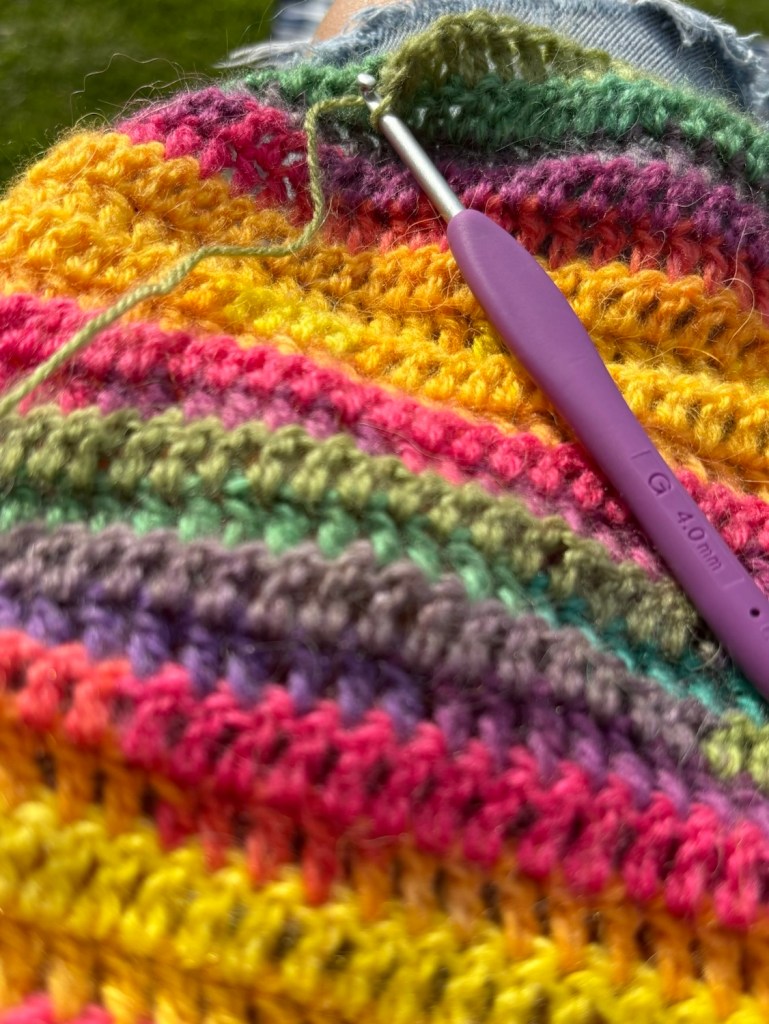
Take knitting, for example. Engaging in activities we truly enjoy helps build resilience—the ability to adapt to challenges and manage stress. When we are fully absorbed in a creative task, we can enter a state of “flow,” where we focus entirely on the present moment rather than dwelling on the past or worrying about the future. This level of engagement leads to greater life satisfaction and productivity.
Social connection is another key ingredient. Feeling supported and a sense of belonging helps us manage stress more effectively. Hobbies like knitting and crochet provide wonderful opportunities to build friendships based on shared interests, and doing so strengthens our social network. Even better, helping others is another way to achieve happiness, so supporting your network adds to the personal benefits as well!
Having a sense of meaning and accomplishment are other great ways to boost wellbeing. Setting personal goals to work towards in any area of life, including cosy hobbies, provides purpose to our pleasures. Whether you’re learning a new craft or challenging yourself with a new pattern, working towards goals and feeling accomplished boosts self-esteem, positive emotions, and overall wellbeing.
Photo: Emma Palmer-Cooper
The joy of cozy hobbies is that they naturally incorporate many of these ingredients. You can enjoy them alone, or as part of a community. Whether you connect with others in person or online, the benefits remain the same: a greater sense of joy, engagement, purpose, accomplishment, and shared connection support your wellbeing.
So, if you’re looking for a scientifically-backed way to increase your happiness, picking up a cozy hobby might be the perfect place to start!
It’s a familiar picture for many of us: after a long day at work, we find ourselves glued to the couch, phone in hand. Maybe even for hours at a time. What starts as a way to mentally unwind or catch up on the news quickly becomes hours spent compulsively “doomscrolling” – the act of spending an excessive amount of time on social media scrolling through overwhelmingly negative content. A fear of missing out is what drives many of us to continue our repetitive scroll.
The good news is there are many ways to break this bad habit – and one way people have successfully replaced time on their phones is with a hobby.
By making a conscious decision to change a habit – such as picking up your phone and doomscrolling for hours – you can replace it with one that’s more fulfilling.
Having an after-work hobby is linked to better wellbeing and may play a part in reducing work-related stress.
Some of the most beneficial hobbies to try in order to break your doomscrolling habit are those that encourage mindfulness. Doing a hobby mindfully simply means paying attention to what you’re doing and being in the moment – whether that’s colouring, knitting or sewing.
Mindfulness is the practice of focusing your attention on the present moment and experiencing your thoughts and feelings without judgment. It’s not necessarily about clearing your mind, but about engaging in an activity with your full attention, and not being distracted by other thoughts.
Here are just a few ways that mindful hobbies can help you break your doomscrolling habit.
1. They hold positive attention
When you’re focused on a craft, your hands are busy, so you’ll be too engaged to reach for your phone. Creative hobbies that require attention, such as knitting or colouring, can also act as a “flow activity”, where you lose track of time and feel fully immersed in what you’re doing. This can be a great antidote to losing hours doomscrolling.
2. They’re calming
Many people who have a creative hobby say the physical repetitive actions are meditative and calming.
Crafts can also support healthy emotion regulation – our ability to manage and respond to emotional experiences. Soothing your nervous system can counteract tension triggered by doomscrolling.
3. They provide a sense of achievement
Doomscrolling can leave people feeling a loss of control, whereas mindful hobbies provide a sense of control along with tangible results: a colourful drawing, a knitted scarf or perhaps an embroidered trinket.
Achievement is considered one of the core ingredients of psychological wellbeing – and is a key remedy to distress.
4. They reduce stress and anxiety
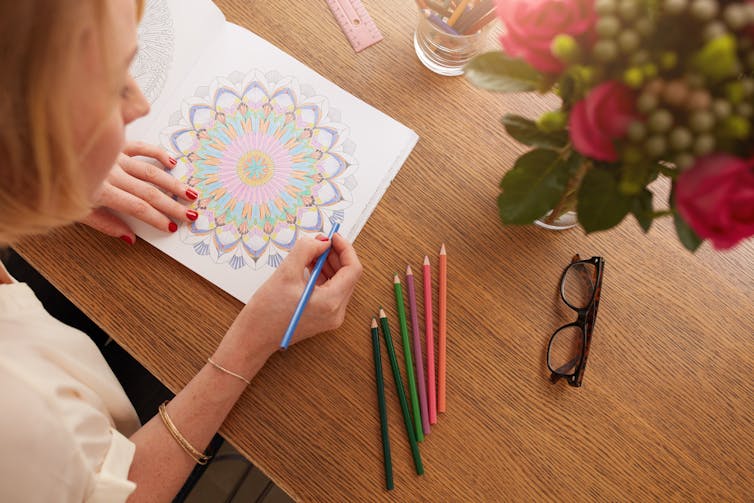
Mindful crafting offers a break from ruminating. Just ten minutes of regular mindful colouring – at least three times a week for two weeks – can reduce stress, anxiety and feelings of low mood, alongside improving quality of life.
Creative hobbies can also significantly lower levels of our stress hormone, cortisol, which promotes a sense relaxation.
5. They offer a sense of belonging
By engaging in a new hobby you also join a community of people with similar interests. This opens you up to more positive social interactions, and a sense of belonging is linked to better wellbeing.
Choosing the right hobby
Activities such as colouring, knitting, sewing and crochet are a good place to start as they involve repetitive, soothing movements along with a sense of achievement. Of course, you should choose a hobby you think you’ll enjoy, as you won’t build new habits doing activities you don’t want to do.
Here are some other things you can do when getting started to give you the best chance of success.
Start small. Actively setting a small and achievable change in behaviour can increase your success in building new, positive habits. So to begin with, choose a simple project that’s not too hard to complete – such as colouring a single page or knitting a small square. Or, set a goal to spend 10-20 minutes a day on your hobby after work before reaching for your phone. Early, achievable wins lead to a sense of achievement, and keep you motivated.
Set boundaries around phone use. Create a “no phone zone” and make time for your hobby. This will help remove temptation to scroll and make a more calm environment for you to craft in.
Be present. Notice the colours, textures and movements involved in what you’re doing. If your mind starts to wander, gently bring your focus back to your activity.
Join a community. Whether online or in person, connecting with others who do the same hobby can increase your sense of belonging and make it even more enjoyable. This can also promote more positive online interactions.
Breaking your doomscrolling habit doesn’t mean you have to abandon social media entirely. But swapping scrolling for mindful hobbies in your free time allows you to set meaningful boundaries and build positive habits. By prioritising your wellbeing and engaging with information in a balanced way, your brain gets a “mental break” from all the negative content.
Sit, slow down and colour. It’s such a simple activity, but for many students, colouring in is a powerful way to ease stress and improve mental well-being. In public areas, libraries or private spaces, students can take the time to fill blank spaces with coloured pens or pencils, and let the repetitive motion and creativity calm their minds….






 Emma Palmer-Cooper